At Mona News, we believe that technology should be accessible and understandable to everyone, not just a complex puzzle for specialists. Therefore, we have made it our mission to simplify these modern technologies and present them to you in a "practical and clear" format, with a special focus on Automation Jobs that have begun to completely reshape our career paths. Our goal is to empower readers to understand the digital transformations shaping the world and help them discover the opportunities these tools create, rather than viewing them as obstacles, so that together we can take charge of the digital future.
While some portray "automation" as a monster threatening human livelihoods, we see a much deeper and different reality. Today, we are not merely witnessing the replacement of labor with machines; we are living through a revolution that redefines Automation Jobs through the lens of human value and creativity. Thus, the most important question remains: Is automation a lurking danger, or is it the strongest call technology has ever issued for us to evolve and upgrade our skills?
"Automation Jobs": How to Survive with Your Skills in the Age of AI?
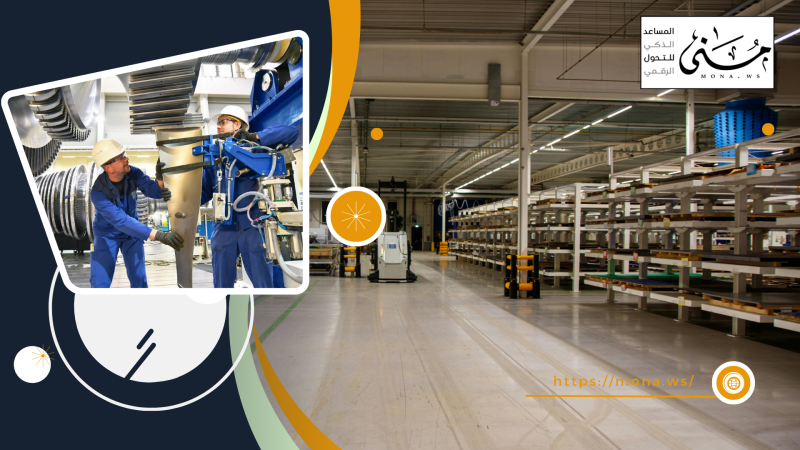
When we hear the word "automation," we immediately think of robotic arms in car factories. However, in 2025, Automation Jobs are sitting with us in our offices; they are the "emails" that reply to customers automatically, the software that organizes company budgets in seconds, and the algorithms that suggest what you should buy. This shift has caused many routine professions to "disappear" in their old forms, but in return, it has made the value of the "human touch" rise unprecedentedly in the face of increasing Automation Jobs.
What is actually changing in the labor market?
Let’s be realistic and speak the language of numbers and facts; yes, some professions are shrinking and gradually withdrawing from the scene, such as data entry, traditional archiving, or simple administrative tasks based on repetition. But this is not the "end of the road." Instead, it is clearing space for a massive gap in the market that demands a new type of competency capable of managing Automation Jobs—specialized employees that machines simply cannot replicate.
Here, the human role emerges across three main pillars that cannot be bypassed:
-
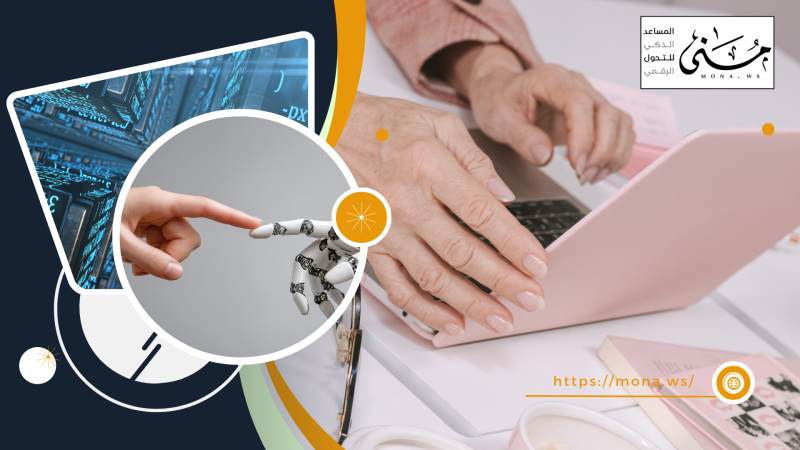
The Monitor and Guide (The Tech Maestro): No matter how intelligent a machine becomes, it remains a brilliant "executor" lacking critical sense. Today, we desperately need those who can "manage" these Automation Jobs, review their outputs, and correct their course when algorithms fail. Humans are the "compass" that ensures technology works in the right direction.
-
"Empathy and Emotional Intelligence" Jobs: This is the impenetrable fortress of humans that compensates for the "dryness" of Automation Jobs. In sectors like mental health, education, and administrative leadership, machines remain completely helpless. A robot cannot decode the feelings of a frustrated employee or build a complex strategy based on "human intuition."
-
Solving Unexpected Problems: AI and Automation Jobs excel in predictable scenarios, but they stumble in the face of "chaos" or sudden crises. This is where the role of the employee who possesses quick wit and the ability to think outside the box becomes vital.
How to Survive (and Thrive) in the Age of Automation?
The real secret to staying relevant is not necessarily learning programming, but mastering skills that "cannot be automated" or programmed. While Automation Jobs handle purely technical tasks, the responsibility falls on you to develop the "Golden Triad":
-
Mental Flexibility: Being "Like Water" in a Changing Market
-
What does it mean? The ability to "unlearn" old ways and acquire new tools quickly. A successful employee sees automation programs as a "new colleague" rather than a competitor.
-
How to apply it? Do not lock yourself into a rigid job title; be ready to merge your current expertise with AI to become a "hybrid" professional.
-
-
Solving Complex Problems: Where Machines Fail
-
What does it mean? The ability to connect information from completely different sources to reach an innovative solution. Machines lack "imagination" and "intuition."
-
How to apply it? Train yourself to analyze difficult situations and always ask "Why?" and "What if?".
-
-
Social Intelligence: Building Bridges Numbers Can’t Build
-
What does it mean? The art of reading between the lines, understanding body language, and negotiating with tact. Work is essentially "human relations."
-
How to apply it? Focus on leadership, empathy, and teamwork. An employee who can resolve conflicts or inspire a team is "irreplaceable."
-
From Theory to Practice: How "DocuSuite" Turns Automation into Reality
Automation Jobs are no longer just future predictions; they are a daily reality through integrated platforms like "DocuSuite," which has revolutionized the "Smart Office" concept. Digital transformation is not just about going paperless; it is a complete re-engineering of how organizations operate—from small businesses to large government entities.
-
Security and Speed in One Environment: Through Secure Document Archiving and Smart Document Control, DocuSuite provides a radical solution to traditional administrative dilemmas. It saves wasted time and ensures data protection, allowing human talent to focus on "Decision Making" rather than "Paper Management."
-
Integration of Vital Sectors: Automation Jobs today are characterized by extreme flexibility. DocuSuite excels in Financial Services (budgeting and invoices), Healthcare (organizing patient records), and Logistics (ensuring the flow of global supply chains).
-
Empowering a Mobile Workforce: Work is no longer tied to the office. DocuSuite’s automation supports a Mobile Workforce, allowing secure access to vital data from anywhere in the world, enhancing organizational resilience.
Conclusion
Activating Automation Jobs through platforms like DocuSuite does not mean marginalizing humans; it means granting them "superpowers" to perform tasks with greater intelligence and less effort. It is an invitation to elevate human work to be more creative and influential in shaping the future.
The important question now is: Have you started developing even one skill that makes you "irreplaceable"?




Comments
Add New Comment